Tianyi Academy

A Serious Science Platform for Thermal Protection

From Fundamentals to Applications: A Systematic Analysis of Thermal Protection Technologies for Extreme Space Environments

Article Content

What does 1600°C mean: From home ovens to rocket reentry
2026/7/18
79Read
1

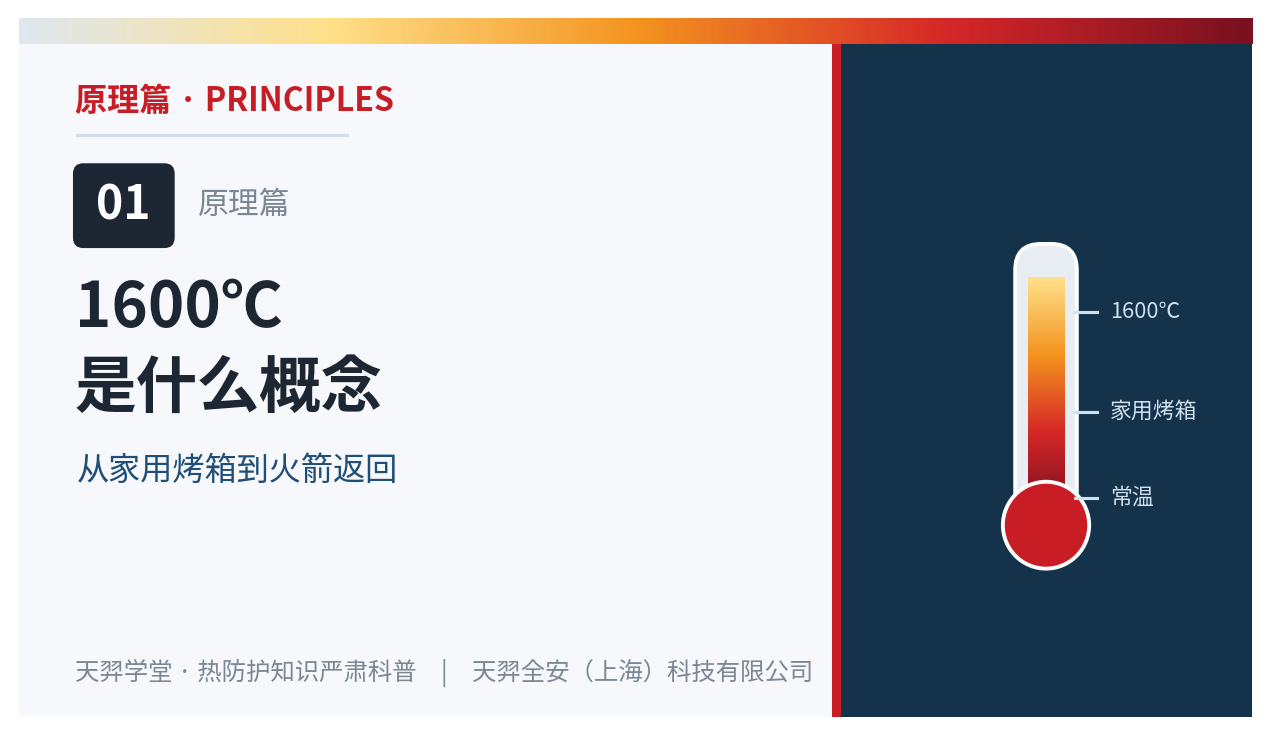
What does 1600°C mean? From home ovens to rocket re-entry

Home ovens reach 250℃, while a spacecraft's reentry surface hits 1600℃. These aren't just isolated numbers—they represent a temperature threshold that eliminates most materials. This article uses a temperature ladder to help you understand how hot 1600℃ really is.

Author:Tianyi Quan'anRead more

Three Paths of Heat: Conduction, Convection, Radiation — Three Locks Against Heat
2026/7/18
97Read
2

Three Paths of Heat: Conduction, Convection, Radiation — The Three Locks Against Heat

Heat reaches your body through only three pathways: conduction, convection, and radiation. To keep heat out, you must lock all three. This article explains how these three barriers work together.

Author:Tianyi Quan'anRead more
Insulation ≠ Heat Resistance ≠ Heat Protection: Three Terms Often Confused
2026/7/18
71Read
3

Insulation ≠ Heat Resistance ≠ Heat Shielding: Three Terms Often Confused

Heat resistance, thermal insulation, and heat shielding are three distinct concepts. A ceramic that won't melt at 1500℃ may still allow heat to transfer through to the back. This article clarifies how these terms relate to each other so you don't make a critical mistake in your first selection step.

Author:Tianyi Quan'anRead more
Thermal Conductivity, Specific Heat, Emissivity: 6 Key Numbers to Decode Material Data Sheets
2026/7/18
63Read
4

Thermal Conductivity, Specific Heat, and Emissivity: 6 Key Numbers to Understand Material Data Sheets

A datasheet for thermal protection material is defined by six key numbers. Relying on just one can be misleading. This guide teaches you how to read the core of any datasheet.

Author:Tianyi Quan'anRead more
Why "Lighter Is Harder": The Weight-Reduction Paradox in Thermal Protection
2026/7/18
28Read
5

Why "Lighter is Harder": The Weight-Reduction Paradox in Thermal Protection

In aerospace engineering, there's an old saying: every gram that goes up costs money. But lightweight and high performance are often at odds. This article reveals the unavoidable weight-reduction paradox in thermal protection systems and strategies for finding the sweet spot.

Author:Tianyi Quan'anRead more
Thermal Shock and Thermal Matching: Materials Fail from Tearing, Not Burning
2026/7/18
51Read
6

Thermal Shock and Thermal Matching: Materials Fail by Fracture, Not Burning

A ceramic that withstands 1600°C can still crack instantly under rapid thermal shock. It's rarely the temperature itself that ruins materials—it's the change in temperature. This article explains how thermal shock and thermal matching determine service life.

Author:Tianyi Quan'anRead more
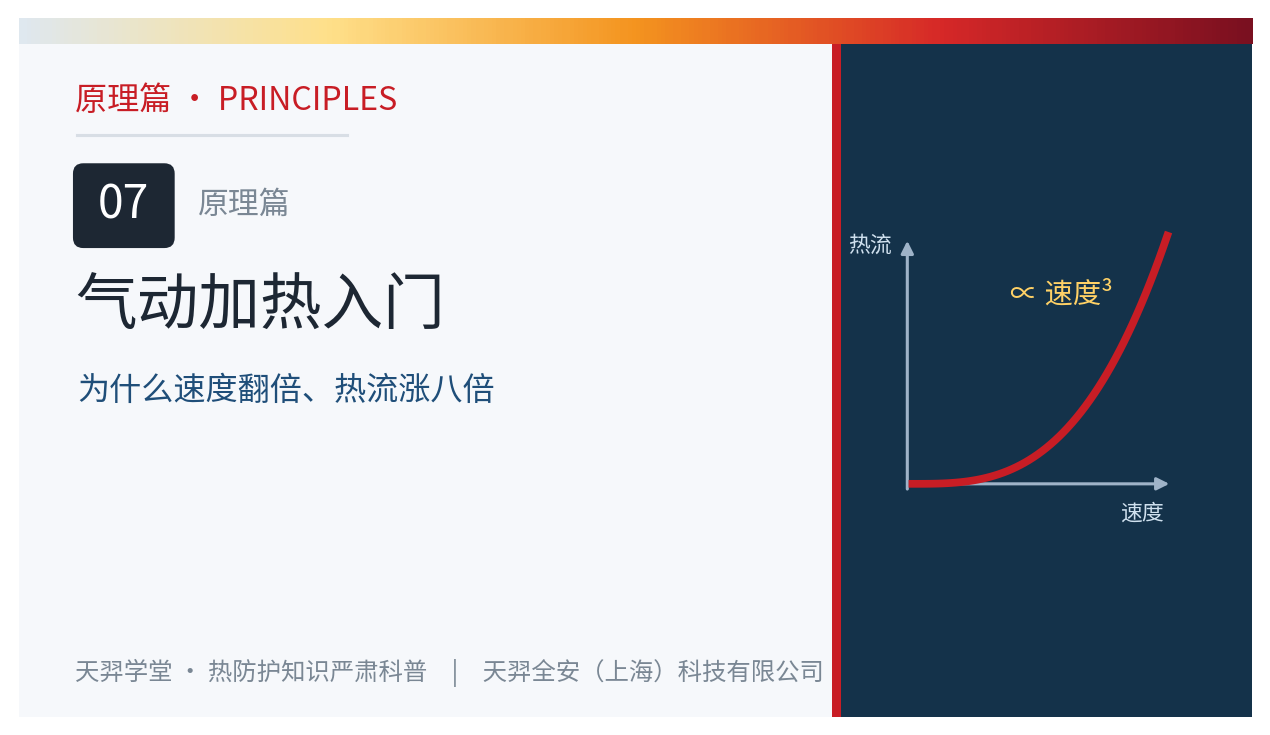
Introduction to Aerodynamic Heating: Why Doubling Speed Octuples Heat Flux
2026/7/18
95Read
7

Introduction to Aerodynamic Heating: Why Doubling Speed Octuples Heat Flux

The faster you fly, the more rapidly aerodynamic heating increases—not linearly, but with the cube of velocity. This curve dictates how challenging it is to engineer materials for high-speed flight. This article explains the wisdom of blunt bodies and why heat flux and time matter.

Author:Tianyi Quan'anRead more
Material Map: Comprehensive Overview of Thermal Protection Materials
2026/7/19
30Read
8

Material Map: Comprehensive Overview of Thermal Protection Materials

Thermal protection materials form a diverse family, each with distinct strategies for managing heat: some sacrifice themselves, others block, some dissipate, and a few do it all.

Author:Tianyi Quan'anRead more