
Thermal Conductivity, Specific Heat, and Emissivity: 6 Key Numbers to Understand Material Data Sheets

A datasheet for thermal protection material is defined by six key numbers. Relying on just one can be misleading. This guide teaches you how to read the core of any datasheet.
Six Core Thermophysical Parameters
The six numbers engineers need to focus on in a thermal protection material datasheet are:
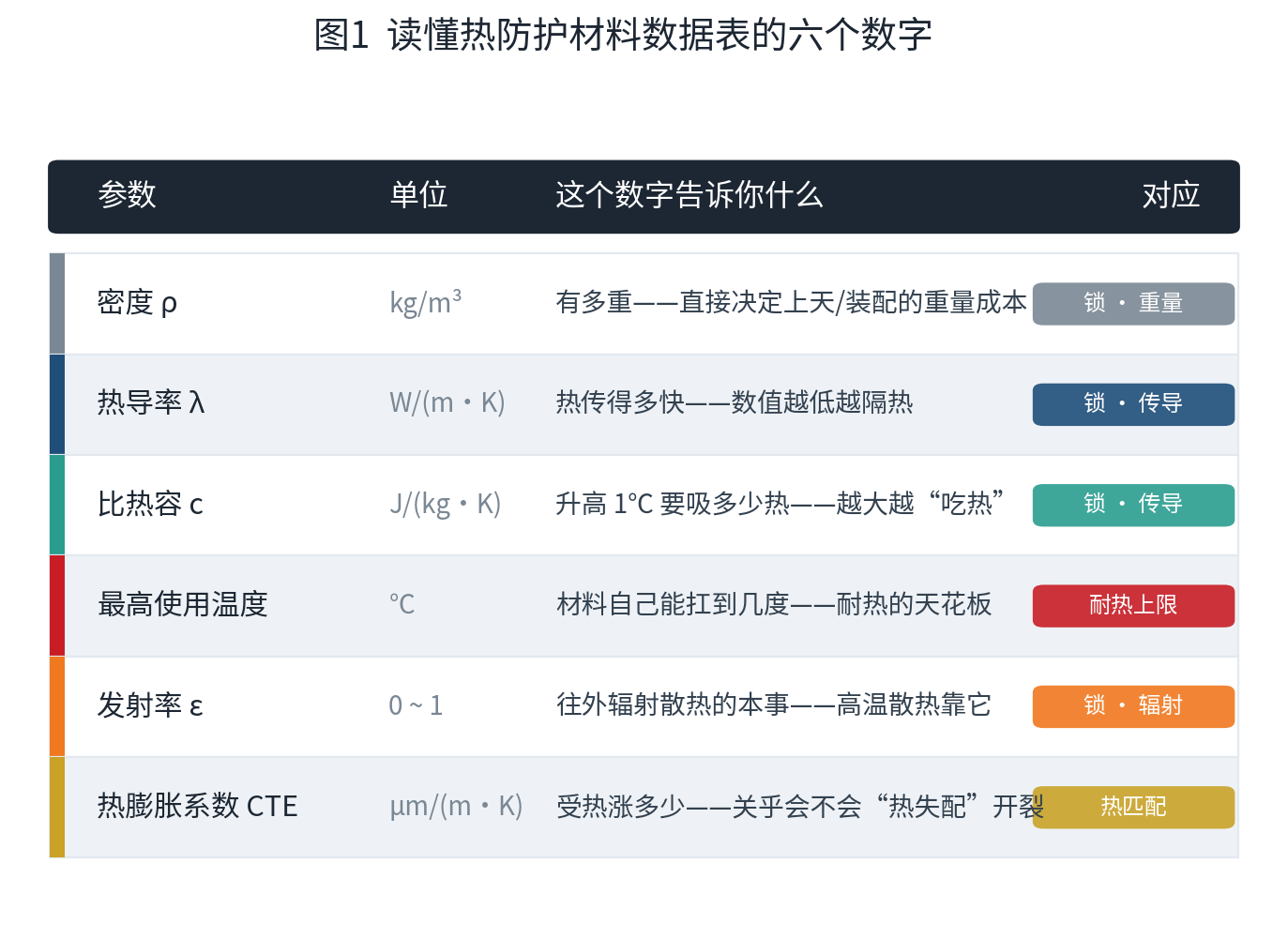
Six Key Figures to Understand Thermal Protection Material Data Sheets – Figure 1
- Thermal Conductivity (λ, W/m·K): Measures a material's ability to conduct heat. Lower values indicate better insulation; aerogel can reach as low as 0.02 W/m·K, while copper reaches up to 400 W/m·K.
- Specific Heat Capacity (Cp, J/kg·K)The heat required to raise the temperature of a unit mass of material by 1K. Higher specific heat indicates stronger heat absorption and buffering capacity.
- Density (ρ, kg/m³): Directly affects weight and volumetric heat capacity (ρ×Cp). Lightweight materials help reduce weight, but excessively low density may compromise strength.
- Emissivity (ε): Efficiency of radiative heat dissipation from material surfaces. High emissivity (> 0.8) facilitates active cooling at elevated temperatures.
- Coefficient of Thermal Expansion (α, 1/K): The rate of dimensional change in a material with temperature variation. A low coefficient of thermal expansion enhances thermal shock resistance and supports multi-layer matching.
- Maximum operating temperature (Tmax, °C)The maximum temperature at which a material can operate stably over the long term. Exceeding this temperature may cause sintering, oxidation, or phase transformation.
Why can't we just look at a single number?
Low thermal conductivity does not equate to effective heat shielding. If a material has low thermal conductivity but also low specific heat, it will overheat quickly. If its emissivity is low, accumulated heat at high temperatures cannot be radiated away, causing surface temperatures to rise continuously. All six parameters must be balanced comprehensively; that's why material selection can never be done by simply consulting a single table.
Traps in Database Tables
Note: Thermal conductivity varies significantly with temperature; room-temperature data can differ by several times from data at 1000°C. Emissivity is highly dependent on surface finish, with polished and rough surfaces showing vastly different values. When reading the data table, always verify that the test temperature and surface condition match your actual operating conditions.
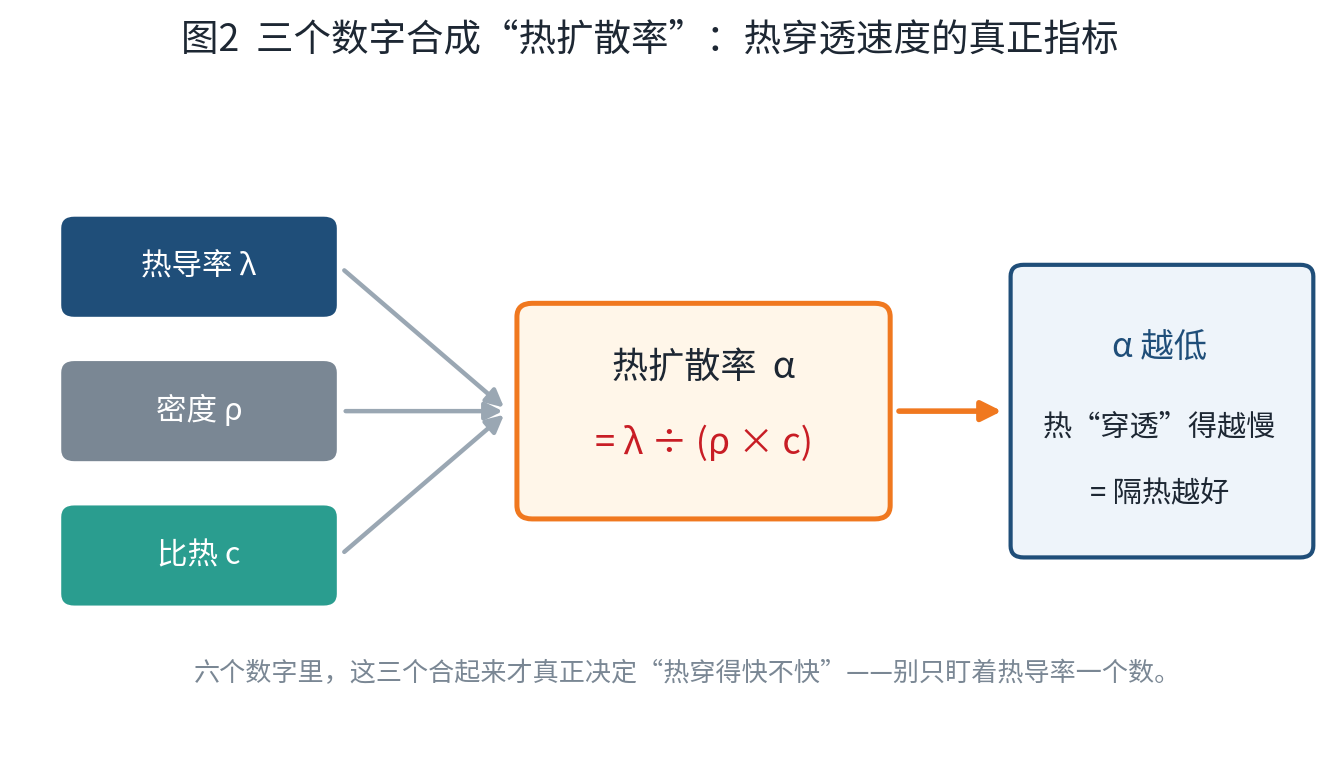
Figure 2: Three numbers combined to form 'thermal diffusivity': the true indicator of heat penetration speed