
Why "Lighter is Harder": The Weight-Reduction Paradox in Thermal Protection

In aerospace engineering, there's an old saying: every gram that goes up costs money. But lightweight and high performance are often at odds. This article reveals the unavoidable weight-reduction paradox in thermal protection systems and strategies for finding the sweet spot.
The Essence of the Weight Loss Paradox
The core challenge of a thermal protection system lies in:Lightweight design and high performance are often at odds.。
- Good insulation requires sufficiently thick, low-thermal-conductivity materials → increased thickness → increased weight
- High-temperature resistance requires high-density ceramics or carbon/carbon composites → higher density → increased weight
- To withstand thermal shock, structural strength and toughness are required → often necessitating more material → increased weight.
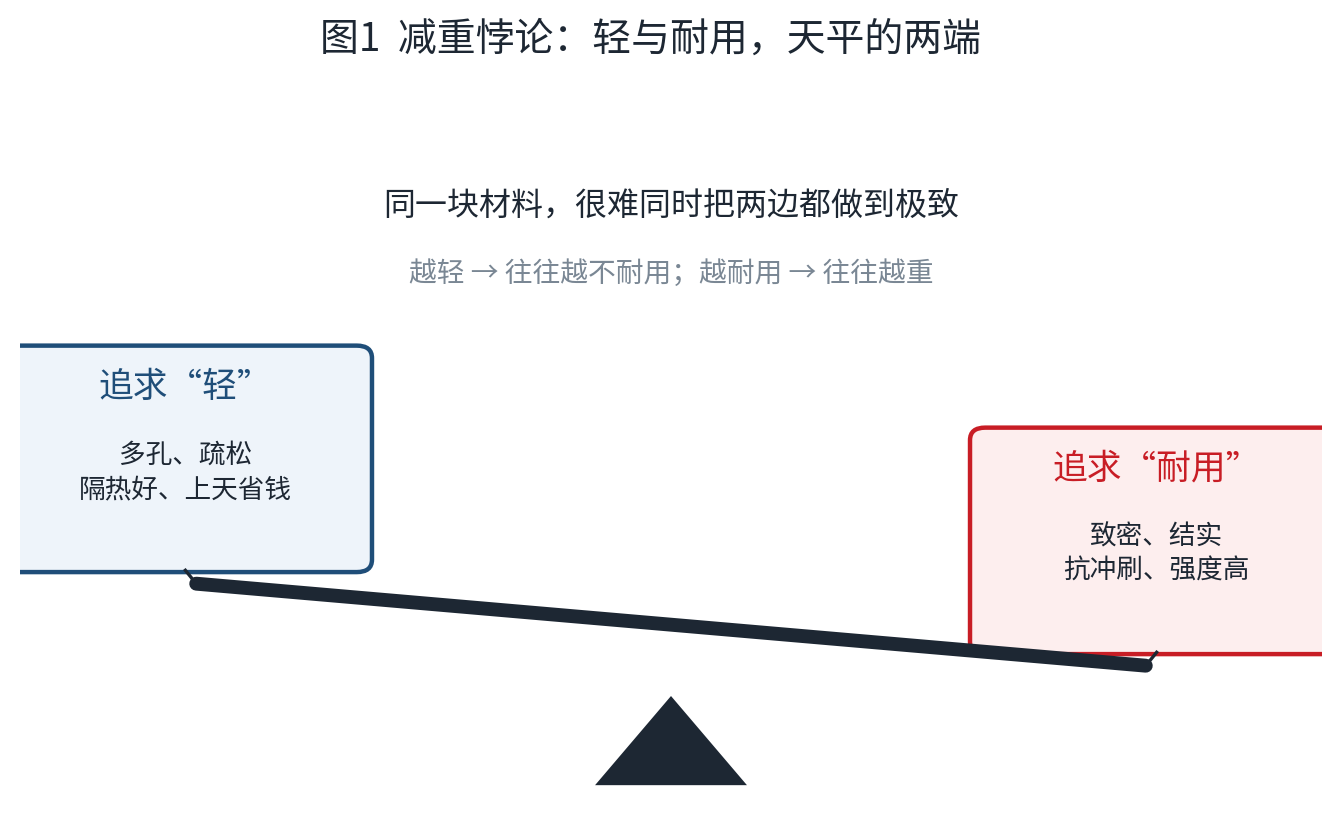
Figure 1: The Weight Reduction Paradox: Lightness vs. Durability, the Two Ends of the Scale
Dessert Zone: Not the lightest, not the safest
In engineering practice, the optimal solution is neither "as light as possible" nor "as safe as possible," but rather finding a balance.Sweet SpotAchieve optimal system-level weight while maintaining safety margins.
Optimizing the sweet spot for reentry requires multidisciplinary collaboration: aerodynamic shape dictates the thermal environment, which determines material requirements; material selection influences vehicle mass; and mass in turn affects payload capacity and orbital design. This is a tightly coupled iterative process that cannot be solved by any single discipline alone.
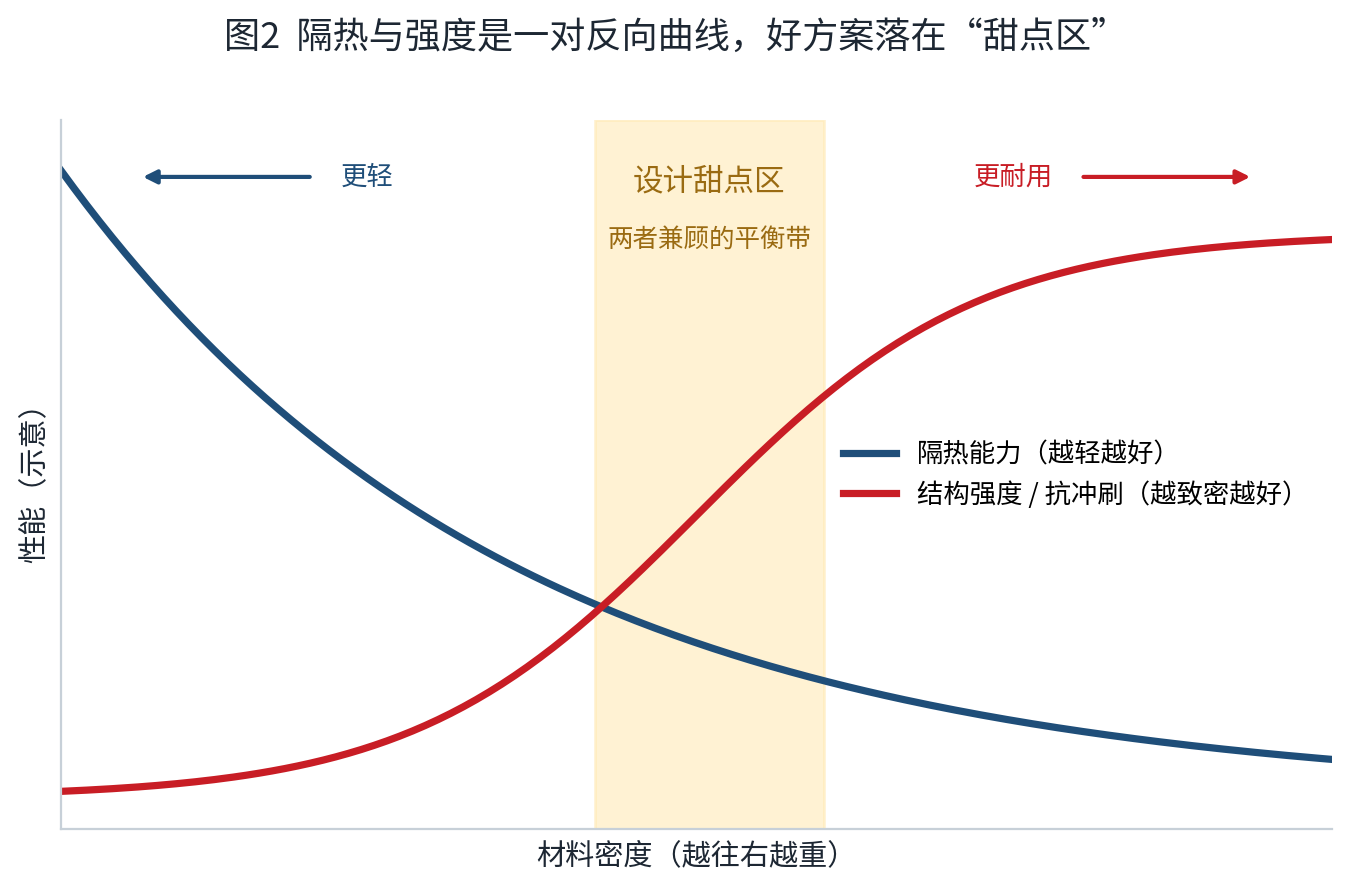
Figure 2: Insulation and strength are inversely related; the optimal solution lies in the "sweet spot."
Realistic Paths to Weight Loss
- gradient materialsOuter layer resists high heat; inner layer provides low thermal conductivity. Each performs its specific function, avoiding the "one-size-fits-all" approach.
- Active CoolingUse minimal coolant to dissipate large amounts of heat, allowing for a thinner passive thermal protection layer.
- Integrated Structure-Function: Enables load-bearing structures to provide insulation simultaneously, eliminating redundant layers.
- Precise Prediction: Improve thermal environment prediction accuracy to reduce weight waste from excessive safety margins.
There's no silver bullet for weight loss. It's an engineering compromise arrived at through constant trade-offs across multiple constraints.