
What does 1600°C mean: From home ovens to rocket reentry
Home ovens reach 250℃, while a spacecraft's reentry surface hits 1600℃. These aren't just isolated numbers—they represent a temperature threshold that eliminates most materials. This article uses a temperature ladder to help you understand how hot 1600℃ really is.
Temperature Range: From Everyday to Extreme
To understand what 1600°C means, the best way is to place it on a temperature scale:
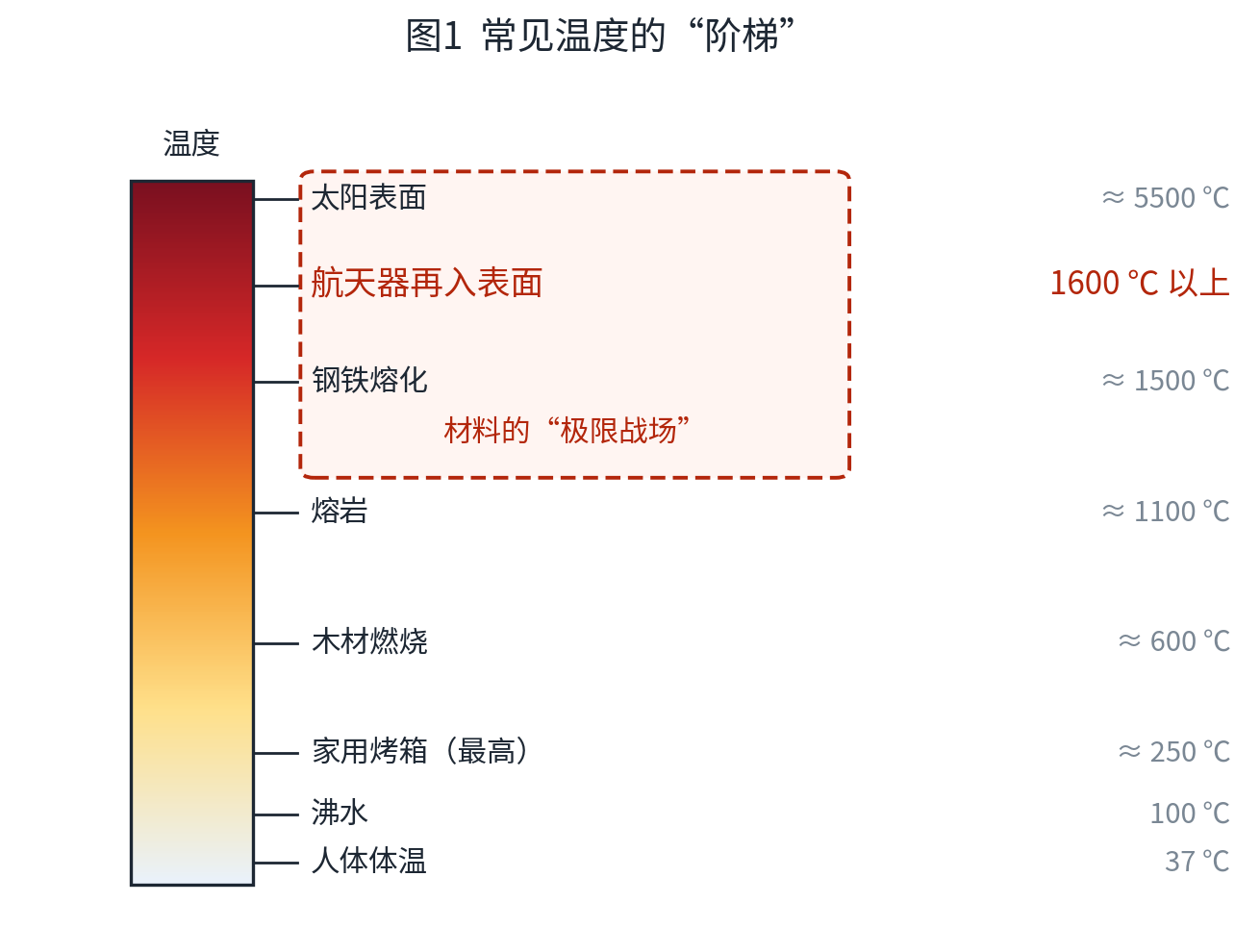
Figure 1: Temperature "steps"
- 100℃: The boiling point of water—the daily cooking ceiling.
- 250℃: Maximum Temperature for Home Ovens – Limits for Baking and Roasting
- 500℃: Aluminum alloys begin to soften; ordinary steel loses significant strength.
- 800℃Titanium alloy operating limit: low-pressure stage temperature in aircraft engines
- 1000℃: Stainless steel has begun to oxidize severely; most organic materials have long since carbonized.
- 1200℃: Maximum operating temperature of nickel-based superalloys; upper temperature limit of quartz fibers
- 1400℃Operating range of silicon carbide ceramics: nose cone temperature of the space shuttle
- 1600℃Typical temperatures on the windward side of a spacecraft during atmospheric reentry; most metals have melted or vaporized.
1600°C is a selection threshold
At this temperature, traditional metallic materials are almost entirely ruled out. The only viable options are a select few advanced ceramics (such as silicon carbide and silicon nitride), carbon/carbon composites, and ultra-high-temperature ceramics (UHTC). This means that for any mission involving aerodynamic heating at the 1600°C level, the range of suitable materials narrows drastically, while costs and manufacturing complexity surge.
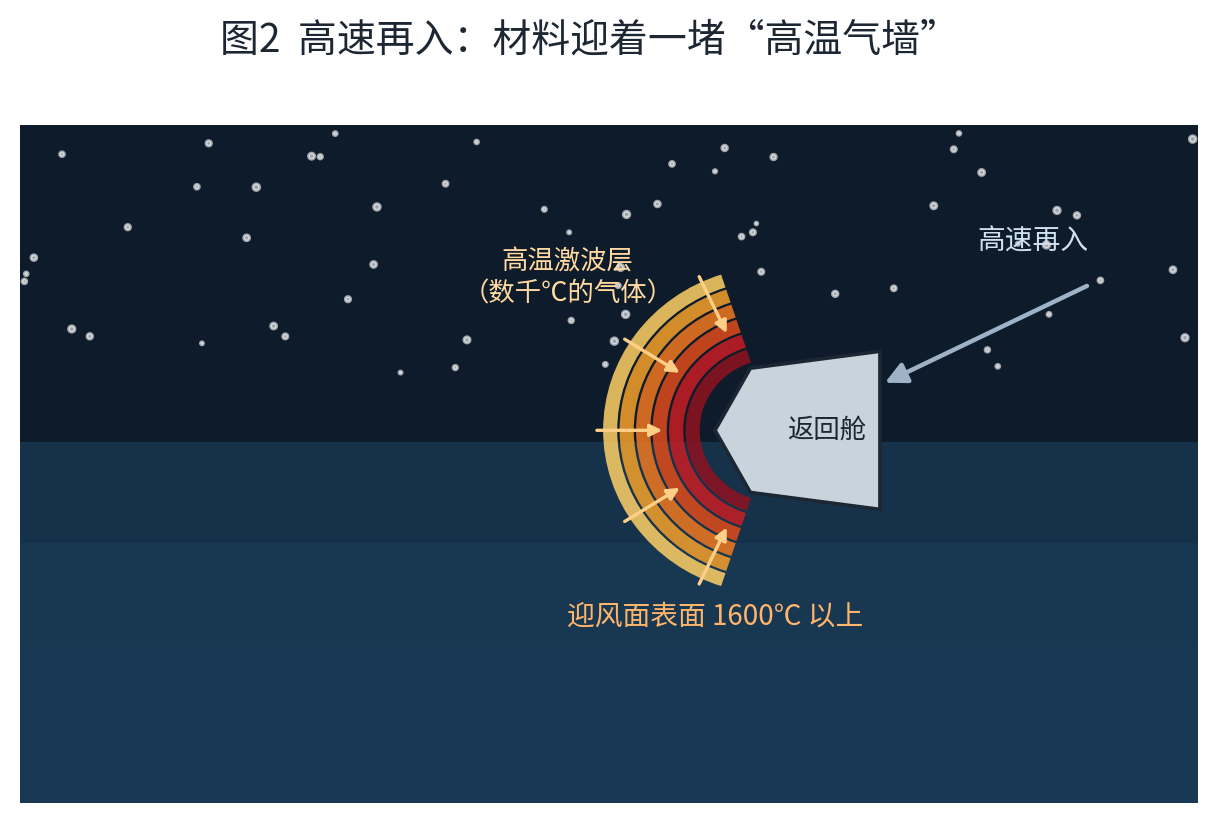
Figure 2 High-speed reentry: materials face a "wall of superheated gas"
Not just peak temperature
Peak temperature alone isn't enough; duration matters just as much. Holding at 1600℃ for 30 seconds versus 30 minutes imposes vastly different requirements on materials. The former may only need surface ablation to dissipate heat, while the latter demands a thermal protection system capable of sustained insulation over time. Therefore, when evaluating the thermal environment, you must consider the full temperature-time profile—not just a single peak value.
Previous
This is the first article.
Next