
3-minute Energy Storage Cabinet: The Material Logic Behind GB 38031-2025

In a battery cabinet for an energy storage station, if a single cell goes out of control, the next few minutes are critical. The national standard GB 38031-2025 requirement of "no fire, no explosion" translates in engineering to a race against time driven by material performance.
1. Introduction: A Race Against Time
In a battery cabinet for an energy storage power station, the outcome hinges on the minutes following a single cell's thermal runaway: will the fire be contained, or will it spread into a disaster? The national standard GB 38031-2025 mandates "no fire, no explosion." In engineering practice, this translates to a race against time—a battle of materials.
② Common Sense: The goal is to gain "delayed" time
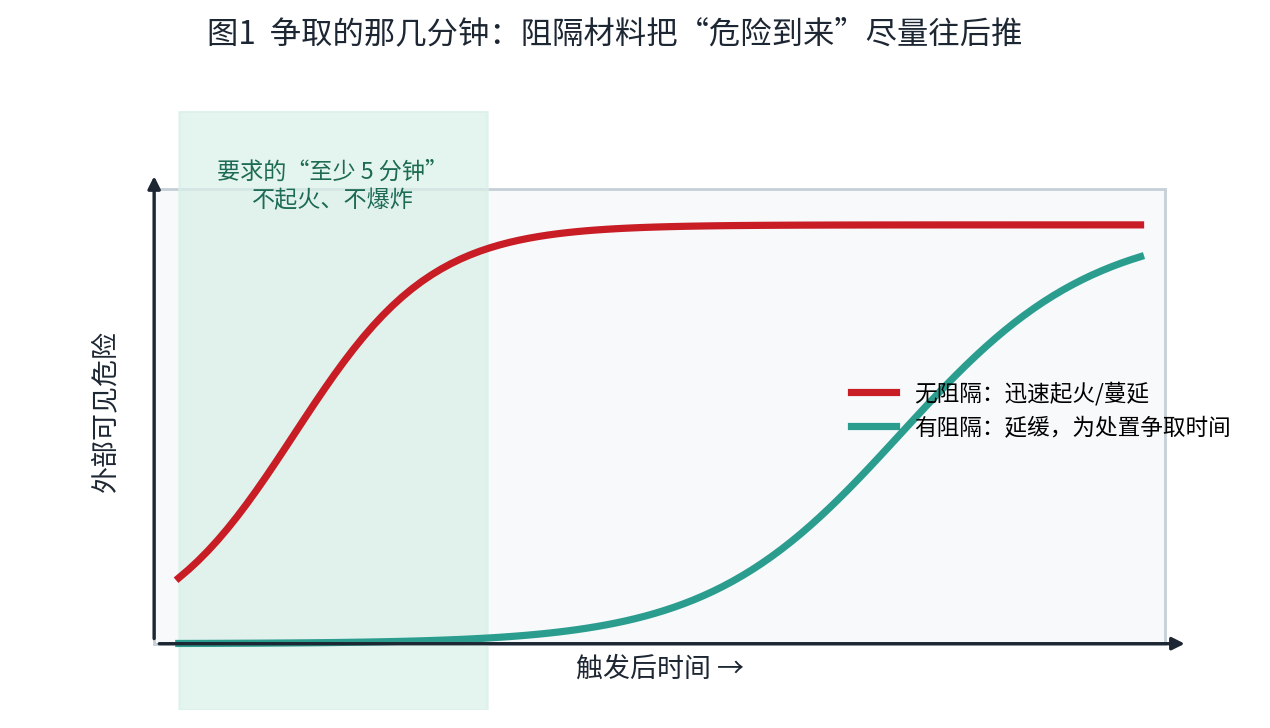
Figure 1: Those precious minutes gained: Barrier materials delay the arrival of danger.
Cell runaway cannot be 100% prevented. The standard approach is: even if it occurs, ensure no fire or explosion, and provide sufficient warning and response time. Barrier materials delay the spread of danger, buying critical minutes for alarms, power cut-off, and evacuation.
Reality: A barrier lies behind the standard
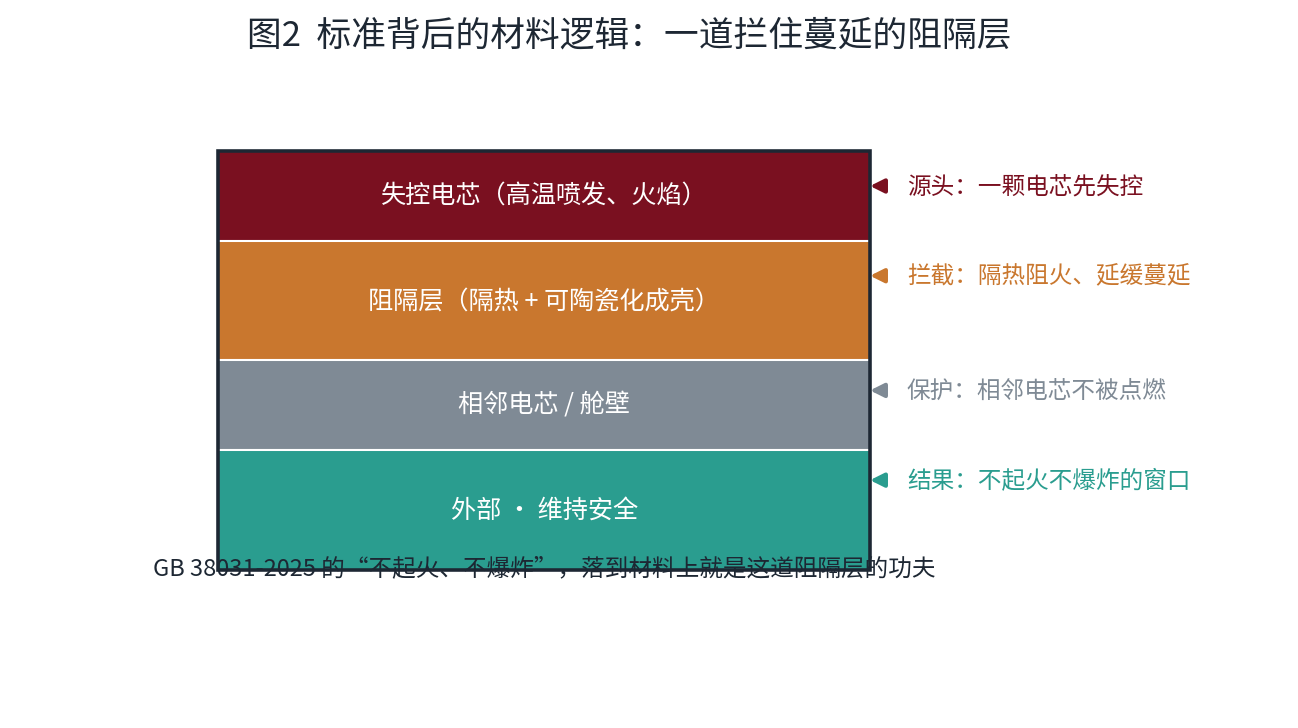
Material logic behind Figure 2 standard: A barrier layer that halts the spread.
"No fire, no explosion" is the outcome goal. For materials, this comes down to the barrier layer between cells and modules: it must insulate against and block high-temperature flames from a runaway cell to prevent ignition of adjacent cells. Here, ceramicized and heat-insulating materials play a key role.
④ Challenge: Real-world conditions are far more complex than imagined
Actual runaway conditions—temperature, flame, ejecta, and pressure—are far more complex than ideal lab scenarios. The barrier must also accommodate assembly constraints, thermal management, and long-term aging. It needs to withstand extreme events instantly while remaining reliable over the long term—a challenging balance.
⑤ Tianyi Perspective: Validate using actual temperature rise curves
When facing requirements like GB 38031-2025, Tianyi Quan'an advocates that static temperature ratings alone are insufficient. Instead, barrier performance must be validated using realistic thermal profiles and thermal runaway scenarios—specifically, whether the material can reliably form a stable shell, provide insulation, and prevent fire spread. Only by rigorously testing those critical minutes can standards truly translate into effective materials.
⑥ Further Reading · Test Consultation
In-site Extensions:
From Space to Consumer Electronics: Why Thermal Runaway in Power Batteries Also Needs Thermal Protection
Ceramizable MaterialsLiquid at room temperature, armor when exposed to fire.
Ceramic Fiber and Nano-Insulation Blanket: Cage the air
Consultation Test
Need to verify thermal runaway barrier materials for GB 38031-2025 scenarios? Contact Tianyi Extreme Environment Laboratory.