
Reuse from passes 10 and 1: Coating decay curve
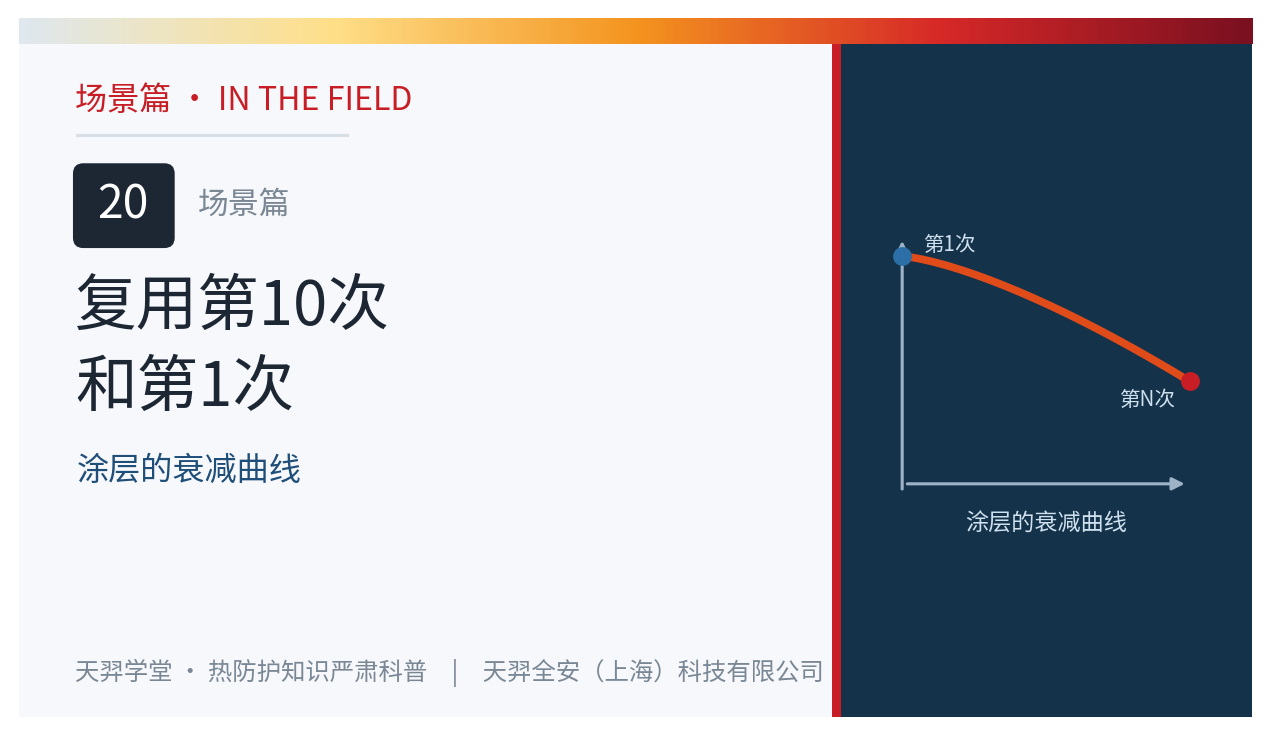
For a reusable rocket's thermal protection system, is the coating on flight 1 identical to that on flight 10? While no visible differences may appear, performance can silently degrade. Understanding this "degradation curve" is a critical step in advancing reusable TPS from concept to engineering reality.
Note: Performance degrades with repeated use.
For a reusable rocket's thermal protection system, is the coating on flight 1 identical to that on flight 10? While no visible differences may appear, performance can silently degrade. Understanding this "degradation curve" is a critical step in advancing reusable TPS from concept to engineering reality.
Attenuation curves for coating in Figure 1: Performance differs between the 1th and 10th tests.
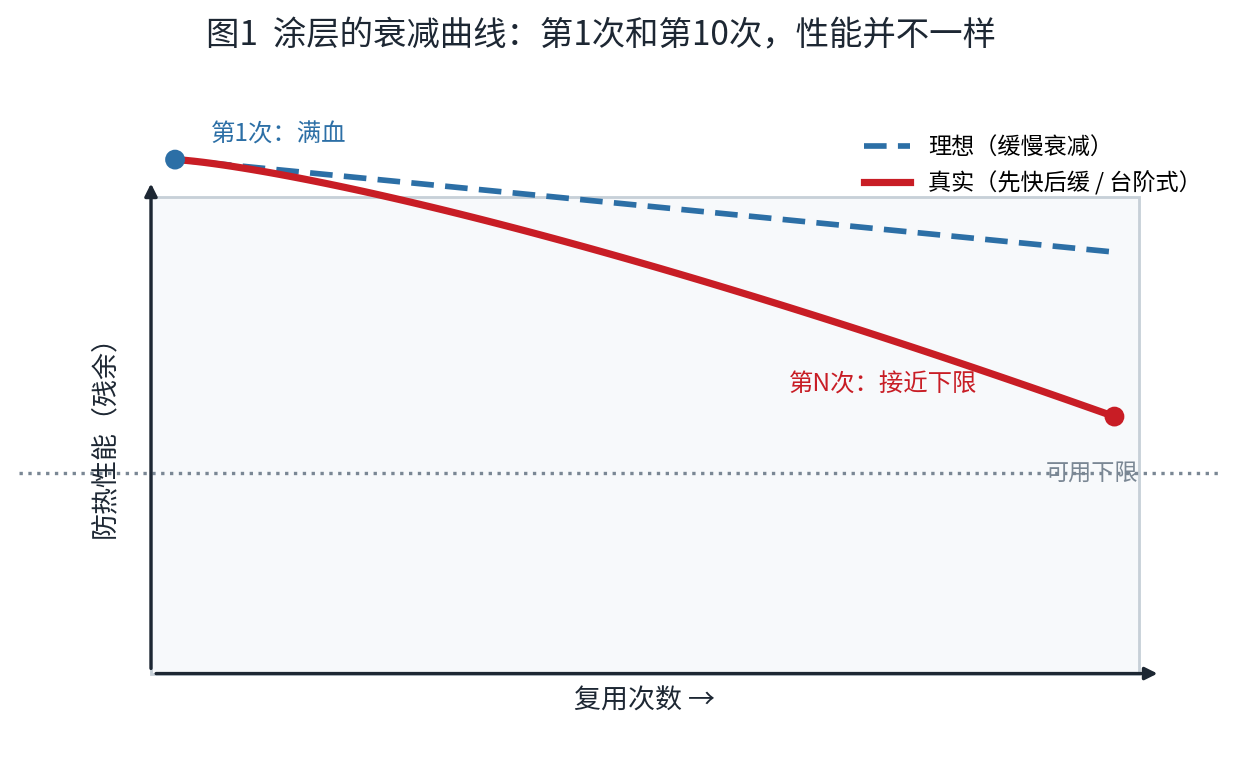
Figure 1 Coating Degradation Curve: 100% capacity at cycle 1, approaching minimum usable threshold by cycle N.
No heat shield coating improves with use. Each thermal cycle and erosion event degrades its performance slightly. Ideally, this decline is gradual and steady; in reality, it often accelerates initially or drops abruptly in steps. Replace or repair the coating once performance falls below the acceptable threshold.
Reality: Decay is the cumulative accumulation of damage.
Figure 2: Origin of Attenuation – Progressive Accumulation of Microcracks, Pores, and Interface Damage
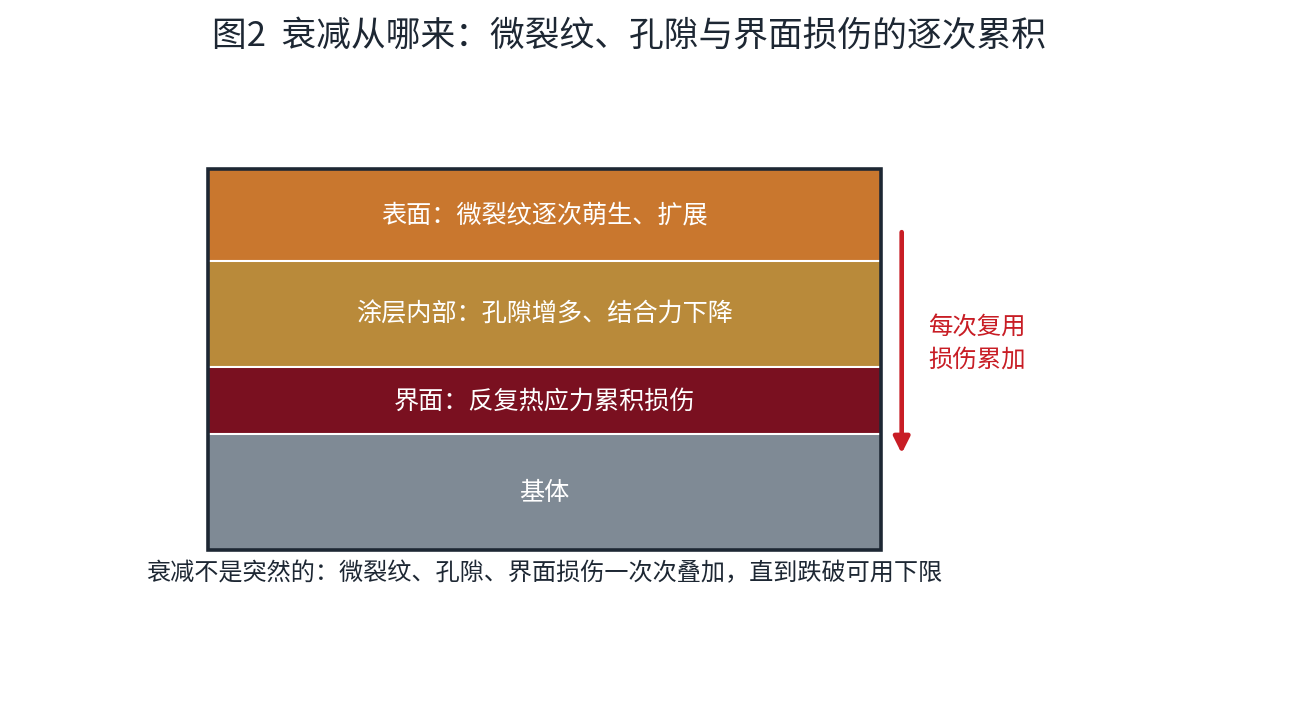
Origin of attenuation in Figure 2: progressive accumulation from microcracks, pores, and interfacial damage
Degradation isn't a sudden event; it accumulates through gradual damage. Micro-cracks repeatedly nucleate and grow on the surface, internal porosity increases in the coating, bond strength declines, and stress builds up at the interface during thermal cycling. One cycle may seem harmless, but ten cycles combined can bring you close to failure.
④ Challenge: How to "predict" rather than "discover after the fact"
The core of reuse economics is knowing in advance "how many more flights are possible." This requires understanding degradation patterns and uncovering hidden damage. Achieving this demands both tests that replicate real-world operating conditions and inspection methods that reveal what lies beneath the surface—shifting from a "fix it when it breaks" approach to one based on actual condition.
⑤ Tianyi Perspective: Plot the decay curve using cyclic testing
Tianyi Quan'an advocates measuring the coating's degradation curve through ground thermal cycling and ablation tests, rather than extrapolating from single-point data. By integrating AI vision to detect micro-cracks and peeling, we aim to transform "when to repair" into a data-driven decision instead of relying on experience-based estimates.
⑥ Further Reading · Test Consultation
In-site Extensions:
- → Reusable Rockets: From "Disposable Heat Shielding" to "Repairable Design"
- Why Coatings Fail: From Crack Initiation to Peeling
Consultation TestWant to test the degradation curve of your coating under multiple cycles? Contact Tianyi Extreme Environment Lab.