
Rare Earth High-Entropy Silane Precursor Ceramics (PHEC): A Low-Cost Pathway to High-Temperature Performance
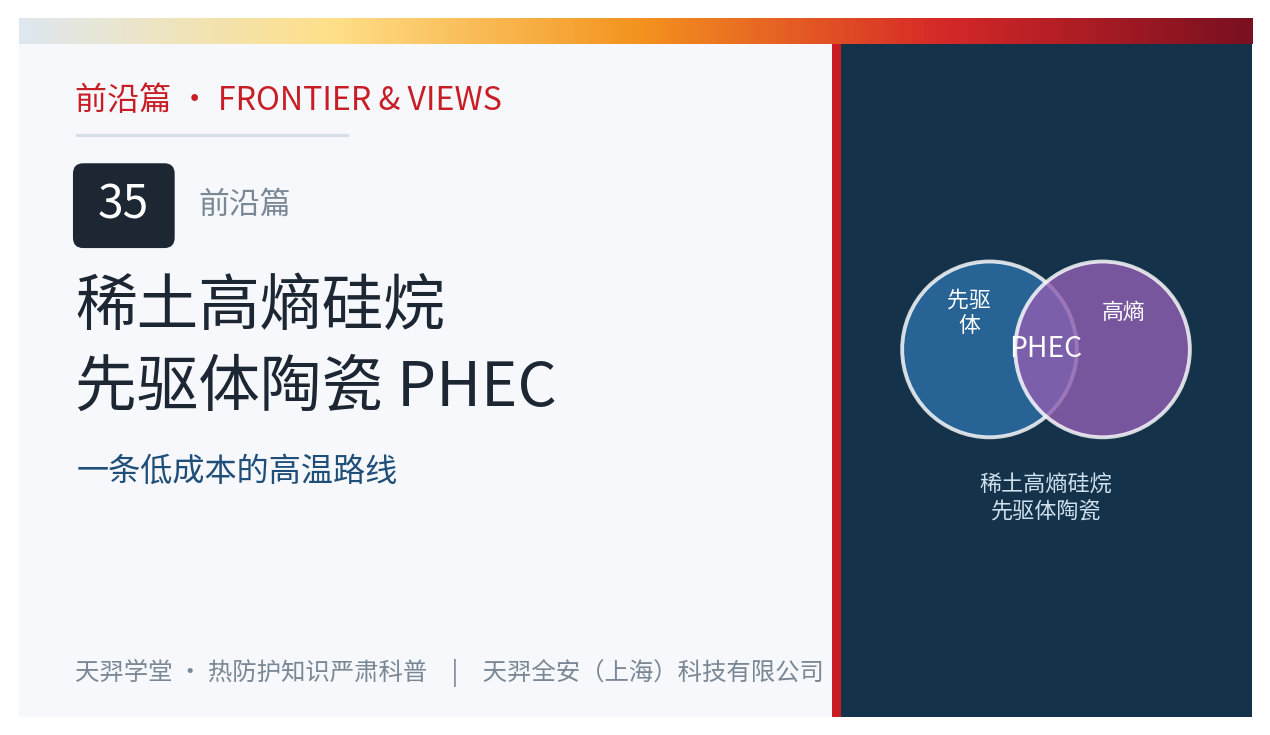
At the intersection of precursor-derived ceramics and high-entropy ceramics, PHEC addresses a key question: Can we maintain high-temperature performance while significantly reducing costs? This article outlines its technical approach and validation pathway.
Introduction
At the intersection of precursor ceramics and high-entropy ceramics lies a promising technical route: rare earth-based high-entropy silane precursors (PHEC). It addresses an increasingly urgent question: Can we maintain high-temperature performance while significantly reducing costs?
2. Common Sense: Where the Two Threads Converge
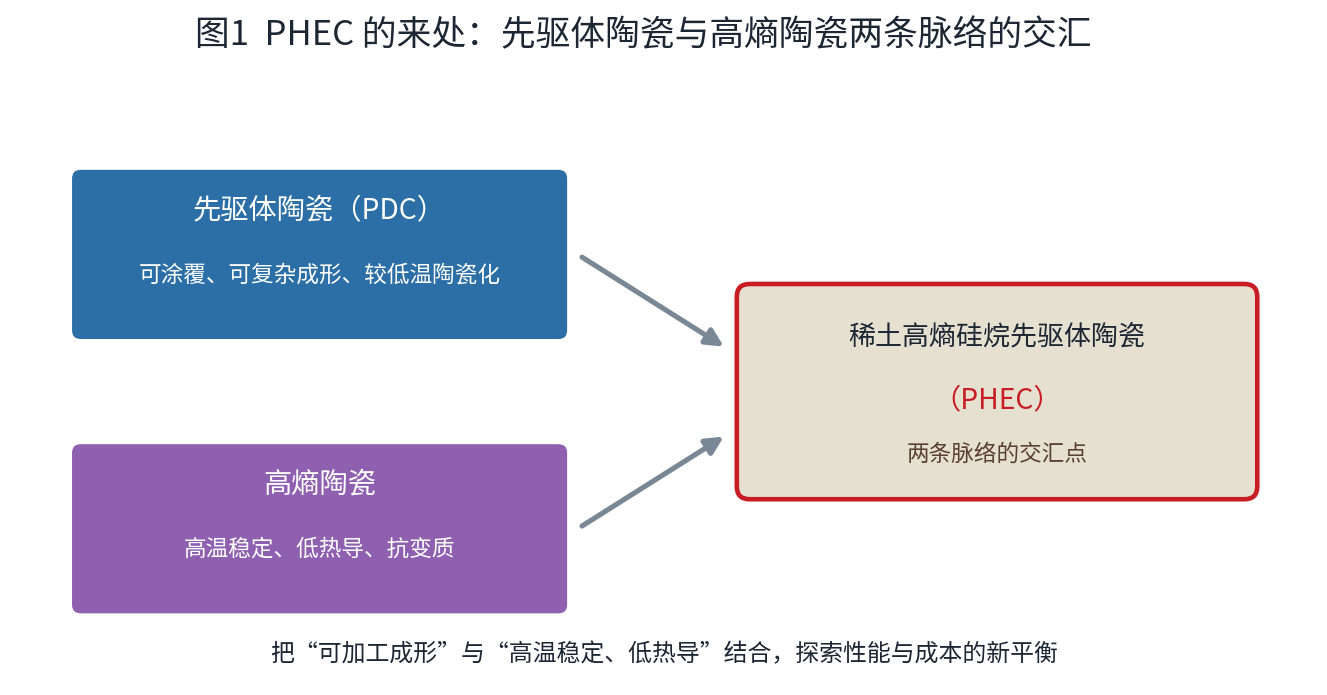
The advantages of precursor ceramics (PDCs) include coatability, complex formability, and low ceramicization temperatures. High-entropy ceramics offer high-temperature stability, low thermal conductivity, and resistance to degradation. Combining these two—leveraging the excellent processability of PDCs to achieve the high-temperature stability of high-entropy ceramics—is the core concept behind rare-earth high-entropy silane precursor ceramics (PHECs).
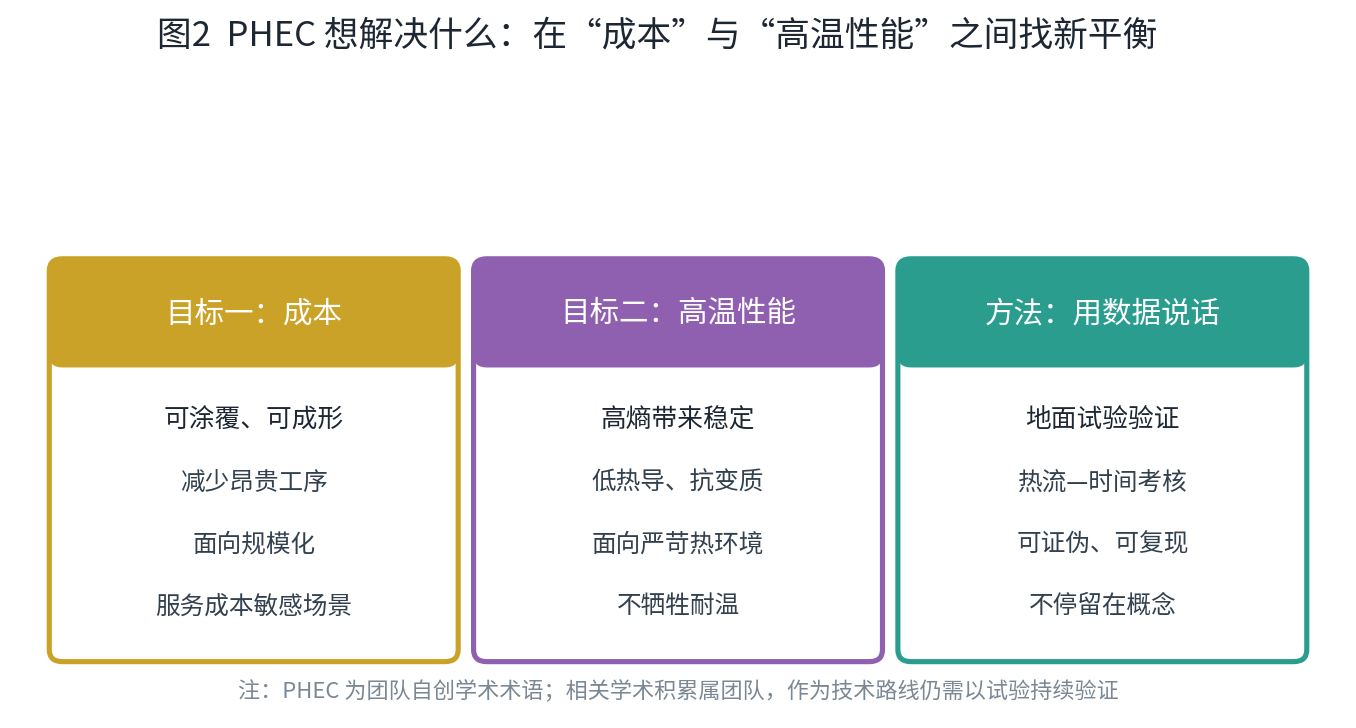
This roadmap targets two goals: cost efficiency and high-temperature performance. Cost is reduced by enabling conformal coating and forming to eliminate expensive processes, making it ideal for scalable, cost-sensitive applications. High-temperature performance is achieved through entropy-driven stability, low thermal conductivity, and resistance to degradation—without compromising heat resistance. Validation relies on ground testing and heat-flux–time analysis to ensure conclusions are falsifiable and reproducible, moving beyond conceptual claims.
④ Challenge: From "Conceptually Sound" to "Stable and Reliable"
A promising technical approach does not guarantee engineering stability or usability. Precursor molecular design, pyrolysis and densification control, and compositional consistency in high-entropy systems all critically impact final performance. Transforming lab-scale feasibility into a scalable, stable, and deliverable product remains a significant challenge.
⑤ Tianyi's Perspective: Advancing through falsifiability
It's worth noting that PHEC is a proprietary academic term coined by our team, and the associated scholarly foundation belongs to us. As a technical approach, Tianyi Quan'an prefers to focus on what problems it can solve rather than rushing to label or draw conclusions about it.
Our approach: validate stability, thermal insulation, and cost-effectiveness using real-world test data. Every claim is verified, challenged, and refined. Technical confidence stems from precise problem definition—not adjectives.
6. Further Reading
Precursor-Derived Ceramics (PDC)The Chemical Magic: From "Polymers" to "Ceramics"
high-entropy ceramicsWhy do five mixed elements create more stability?
The Cost of Thermal Protection: Shifting from "Performance First" to "Cost per Kilogram"