
Tianyi Quan'an's submitted samples achieved excellent results in the "YanJia-2026" thermal protection material competition.
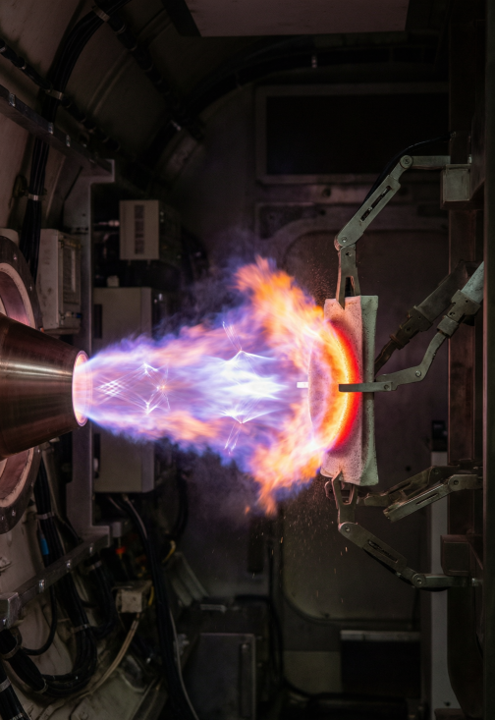
In 2026, month 7, the "Yanjia-2026" thermal protection material competition was held in Mianyang, Sichuan. Tianyi Quan'an, in collaboration with Shanghai Jiao Tong University and partner organizations, submitted two sets of thermal protection material samples, achieving assessment durations of 677 seconds and 888 seconds respectively. These results preliminarily validated the technical feasibility and engineering application potential of a low-cost, room-temperature process route.
In 2026 year 7 month, the "Yanjia-2026" Thermal Protection Material Competition was held in Mianyang, Sichuan. Organized by the Key Laboratory of Fluid Mechanics and Physics of Aircraft in collaboration with 18 leading domestic innovation platforms, the competition focused on the theme of "Integrated Heat Shielding and Lightweight Efficiency." It brought together 76 material R&D units and top enterprises from across the country, along with 97 research teams, to foster a unified and open platform for the certification and evaluation of thermal protection materials.
Tianyi Quan'an, in collaboration with Shanghai Jiao Tong University and partner organizations, submitted two sets of thermal protection material samples (competition IDs 26 and 27). Under the competition's unified testing platform and standardized conditions, both sets underwent multi-level thermal environment assessments. According to on-site records, the samples achieved test durations of 677 seconds and 888 seconds respectively, while maintaining effective thermal insulation throughout the evaluation process.
Notably, both test samples were fabricated using room-temperature spray and curing processes, with a unit cost of approximately $100. In contrast, conventional insulation materials of the same specification typically require high-temperature sintering, costing around $10,000 per unit. In this head-to-head evaluation, our samples performed on par with those made via traditional methods, preliminarily validating the technical feasibility and engineering potential of our low-cost, room-temperature process route.
Tianyi Quan'an stated that participating in the competition provided valuable empirical data under unified material assessment criteria, laying the groundwork for future product iterations and process optimizations. The company will continue to invest in thermal protection materials focused on "lightweighting, cost reduction, and maintainability" to meet the growing demand for thermal protection verification in industries such as commercial aerospace.
Technical Cooperation Inquiry
Interested in the content or want to learn more? Contact us.
Get Started